By Christine Staple Ebanks

Listen to this Article

Lately, I have been thinking a lot about mortality.
I know that is not exactly a staple conversation topic in today’s social space. Most of us do not enjoy thinking about our own death. As women, wives, mothers, daughters, and caregivers, we prefer to focus on living. We like to believe we will always be here for the people we love.
For parents of children with disabilities, however, the conversation carries a different weight.
When we think about the future, we are not only thinking about retirement, travel, growing older, or even death. We are also carrying the question that lives quietly in the background: What happens to my child when I am no longer here?
It is a question many of us try not to dwell on because it can quickly lead to fear, anxiety, and a hundred different scenarios we cannot control. Yet if we are honest, it is a question that deserves our attention.
In our home, that question has not been theoretical. My husband and I have had versions of this conversation for years.
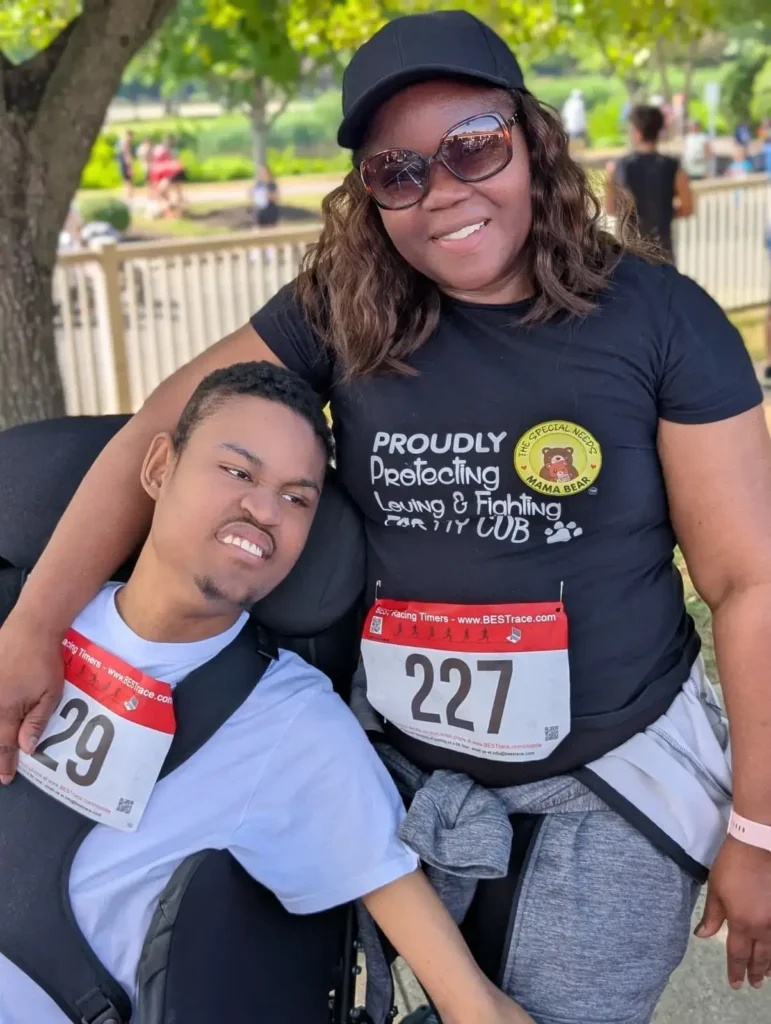
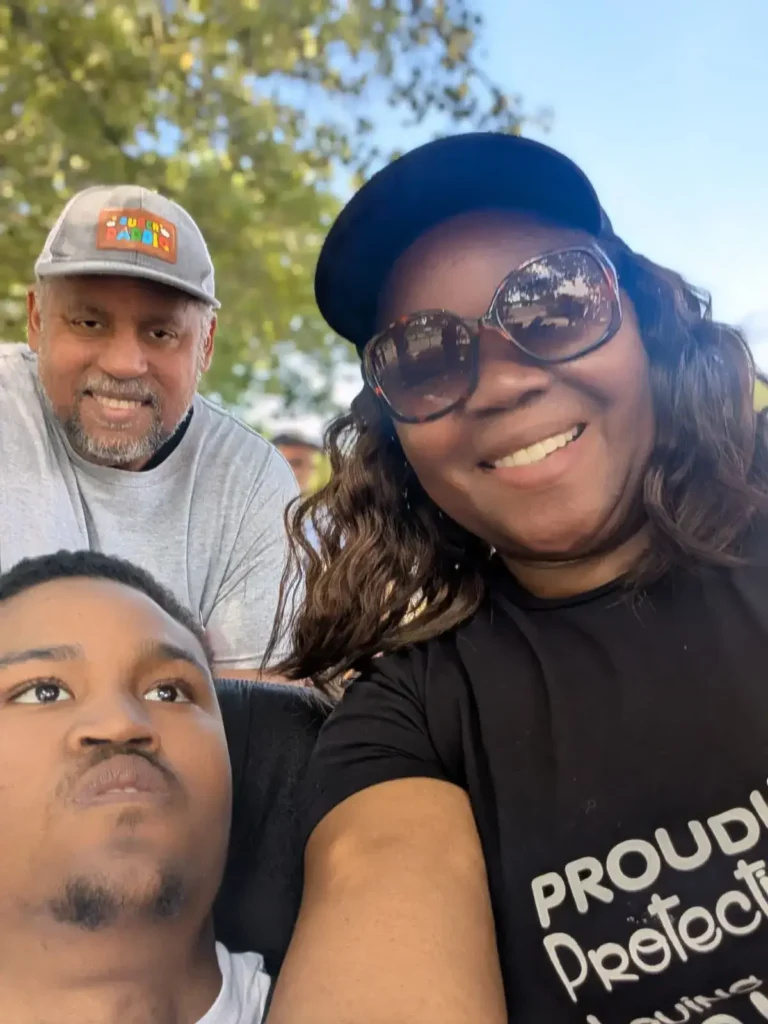
Our son Nathan is twenty-two years old and has cerebral palsy. Like many parents of children with disabilities, we have spent decades coordinating care, attending appointments, advocating for services, solving problems, and building the support he needs to live as fully and joyfully as possible.
Over the years, my husband has often shared two fears with me. One is the heartbreak of imagining life without Nathan. The other is the fear of Nathan having to navigate life without him. I suspect many parents and caregivers reading this article will recognize some version of that fear.
For a long time, those fears lived mostly in conversation. Then earlier this year, something happened that forced me to think differently about them — and about Nathan’s future care.
Future Care Begins with What We Write Down
I developed a respiratory infection and was prescribed medication that triggered an unexpected reaction. At the time, I did not know I was allergic to the medication. The experience was frightening enough that it brought me face-to-face with something I had been pushing aside for a long time—my own mortality.
As I sat with that reality, I found myself thinking less about finances and more about information.
What would happen if I were suddenly gone?
Who would know how Nathan likes to start his day, and the exact order of his morning routine?
Who would know that he loves food with spice and flavor and will close his mouth to something bland?
Who would know that although he is nonverbal, he communicates constantly through his eyes, gestures, expressions, his communication device (iPad), or the relationships he has built with the people around him?
Who would know how to recognize when he is uncomfortable, frustrated, excited, or simply trying to tell us something important?
The truth is, Nathan is deeply loved and supported by our immediate family: my husband, his three siblings, and me. We love him, support him, and are attentive to his needs in the ways that count. Still, about 90% of the day-to-day details that make his life work — his routines, paperwork, appointments, advocacy, and communication with different organizations — are pieces I have carried and managed over the years.
And that realization was a wake-up call.
Advocacy Is Also Future Planning
That moment became a wake-up call. It helped me see that love and advocacy could not live only in the systems I had built in my head or the routines I managed each day. I also needed to think honestly about how Nathan would be protected if I were no longer here to manage those details, or if aging or health challenges one day changed my ability to do so. Since then, I have chosen to become more intentional about preparing for the future — for myself, my son, and my family. That has meant having more honest conversations at home, putting important legal and financial pieces in place, and creating one practical tool I now believe every caregiver should consider: an important document called A Letter of Intent.
Letter of Intent: What it is and why it matters
Unlike a will or a special needs trust, a Letter of Intent is not primarily about money. It is about the person. It is a document that tells future caregivers who your loved one really is. It explains routines, preferences, medical information, communication styles, relationships, daily supports and systems, and the countless details that make up a person’s life.
In other words, it captures the information that no diagnosis ever could.
We have medical reports, of course. Those reports may tell someone that Nathan has cerebral palsy. A Letter of Intent tells them that he has athetoid, dyskinetic cerebral palsy, which explains how cerebral palsy manifests for him and the specific ways it impacts his learning and daily functioning. It also tells them that he loves being around people, enjoys community involvement, watches everything happening around him even when he appears quiet, and thrives when he feels included.
Don’t get me wrong, I am not saying the letter of Intent replaces the medical records. The medical records contain reports, test results, and medical history, which are important for the continuation of care. This is critical information to include in long-term planning documentation. A Letter of Intent, however, captures something equally important: who the person is beyond their diagnosis.
One of the things I have discovered as a special needs parent is that caregiving becomes so embedded in our daily lives that we stop noticing how much knowledge we carry.
We spend so much of our lives managing appointments, therapies, medications, equipment, and routines that much of what we do happens on autopilot. In fact, if someone asked us to explain every step of our child’s day, we might struggle to do it—not because we don’t know, but because muscle memory knows it so well. We simply do what needs to be done.
We don’t think of this as expertise. We think of it as parenting.
But if we were suddenly unable to provide that care, we would quickly realize that the knowledge we carry is not obvious. It was learned over years of observation, advocacy, trial and error, and unconditional love.
That is why documenting our daily activities in a letter of intent matters. Not because we expect the worst, but because our children deserve to have that knowledge preserved for those who may one day care for them.
The Gift of Preparation
The good news is that this kind of future planning does not have to happen all at once. You do not need a legal degree. You do not need to hire a lawyer. You simply need to start. Here are six simple places to begin when creating A Letter of Intent:
- Personal details. Include your child’s full name, date of birth, diagnoses, communication style, personality traits, likes and dislikes, things that bring them joy, and things that may cause distress.
- Daily care routines. Document morning routines, feeding and meal preferences, toileting and hygiene needs, positioning and transfers, wheelchair needs, sleep routines, medications, and how medications are administered.
- Communication. Include how your child communicates. For example, Nathan is nonverbal and uses a combination of sounds, gestures, facial expressions, and his communication device. I include signs for how he communicates hunger, thirst, tiredness, sickness, boredom, frustration, pain, happiness, and more. In fact, one of my books, My Special Travel Companion Log and Notebook: For School and Home Communications, has a section at the front that captures this information with plenty of space to update as you go. This helps ensure that whether he is in school or an adult day program, those caring for him always have this information at their fingertips.
- Medical information. Include current diagnoses, medications, allergies, specialists, equipment, therapies, emergency instructions, and any medical details future caregivers should know.
- Relationships and community life.Write down the people, places, activities, programs, and routines that are meaningful to your child, including school, work, adult day programs, social activities, faith communities, or community involvement.
- Benefits, schedules, and important contacts. Keep track of annual evaluations, recertification deadlines, government benefits, support coordinators, doctors, therapists, agencies, phone numbers, and addresses.
All this might sound intimidating. But remember, you are already doing so much of it, and you already carry a lot of this information in your head. My suggestion is to use the voice recorder on your mobile phone. Start with one area and record a voice note about that piece of your child’s life. Use an app to transcribe it and place it in a Word document. Keep doing that until you have filled in the main areas. After that, you simply keep it updated.
The reality is that none of us knows how much time we have. That truth can feel frightening.
But it can also be empowering. Because while we cannot control how long we will be here, we can control how prepared we leave those who come after us.
Every document you complete, every instruction you write down, every conversation you have is an act of love.
Planning for tomorrow does not mean giving up on today.
It means loving your child enough to protect their future.
Christine E. Staple Ebanks
Author, Speaker, Parent Advocate, and Founder of The Special Needs Mama Bear®

If you’re ready to begin creating your own Letter of Intent, visit TheSpecialNeedsMamaBear.com to download a complimentary template through our free Basic Membership and access additional resources designed to help families plan with confidence and advocate with purpose.
