Listen to this Article

For travellers who find long airport distances difficult, getting to the gate can consume energy needed for the journey ahead. BBGo, an autonomous mobility service developed by Blueberry Technology, is designed to give some of those passengers greater control over how they move through large public spaces.
Blueberry Technology founder Dr. Rajeev Ramanath developed BBGo after noticing older passengers being pushed through airports in wheelchairs. Although many could walk independently, the distances involved in navigating a terminal meant they still benefited from mobility assistance. Once taken to the gate, they often remained there until boarding instead of visiting a restaurant, browsing a store, or moving around the terminal.
This group is larger and more varied than it appears. Airlines use the designation WCHR for passengers who can walk and climb stairs but need wheelchair assistance over longer distances. They may include older adults, people recovering from surgery, travellers with non-apparent disabilities and anyone for whom walking a mile through an airport is difficult. Some may not consider themselves disabled but still need assistance when faced with the long distances often required at airports..
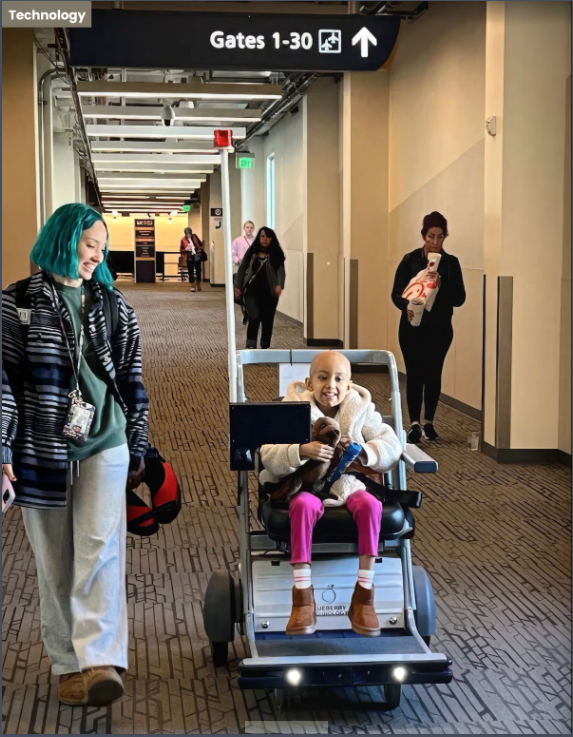
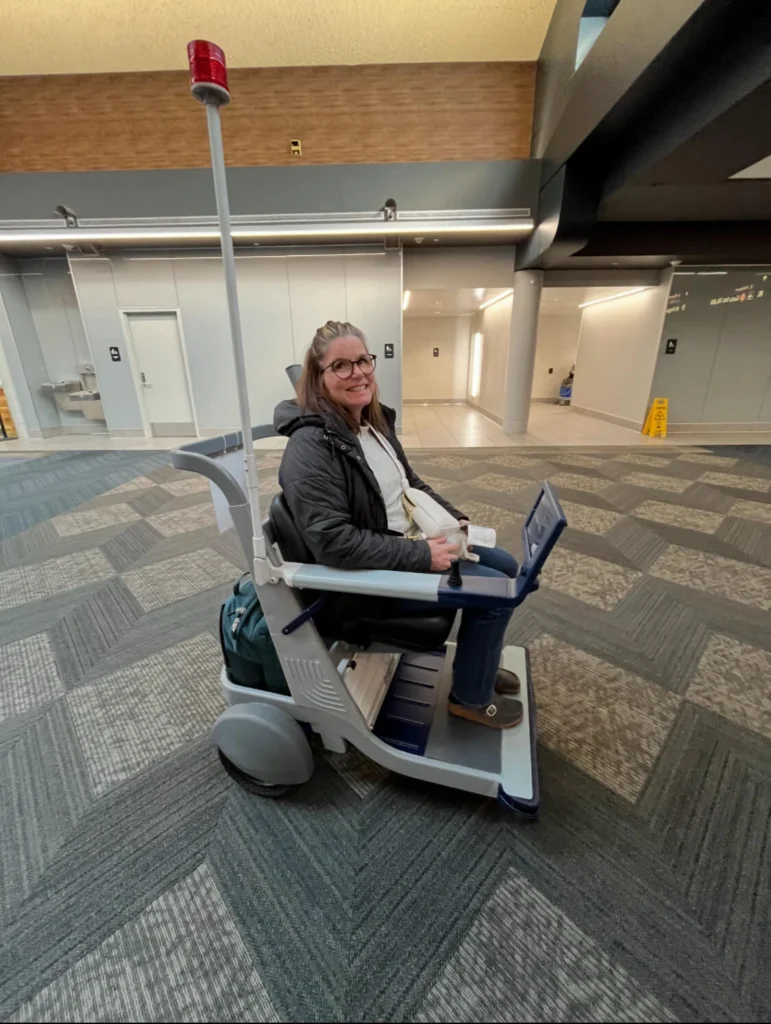
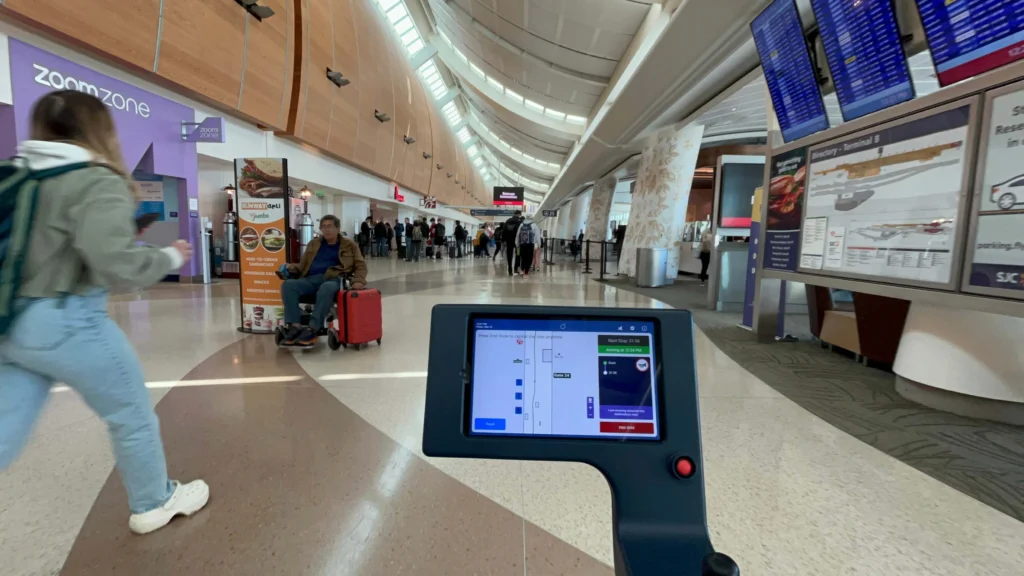
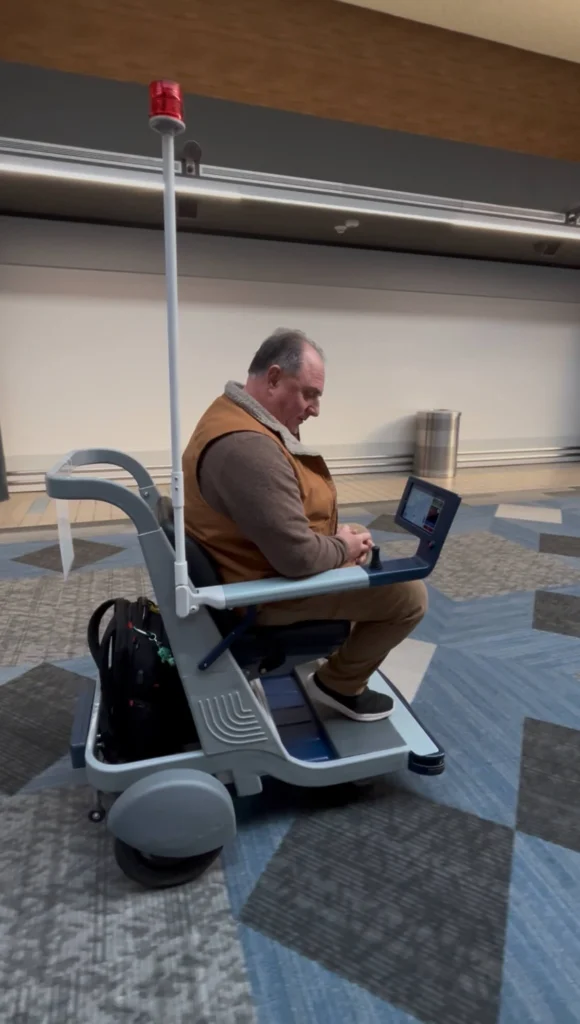
BBGo combines a mobility device with mapping, localization, dispatch, fleet-management and cloud-connectivity systems. The vehicle can navigate autonomously, be controlled by joystick or be pushed manually. Currently, passengers board at a designated airport location, select a destination on the display and are transported there. They can stop the vehicle, pause along the route or end the ride. Passengers can visit restaurants, restrooms or shops without waiting for an attendant. Afterward, BBGo can return autonomously to its home location.
The company’s longer-term vision begins at the airport curb. A traveller would request BBGo during booking or summon one through a kiosk or app. The vehicle would meet the passenger, take them through the terminal and allow stops before continuing to the gate. This experience remains in development. Currently, access depends on the airport and its mobility-service provider, which may offer BBGo to passengers requesting assistance. Travellers should ask their airport or mobility assistance provider whether BBGo is available.
The service is primarily intended for passengers with reduced or limited mobility, but users have represented wider needs. They include people using canes, walkers or crutches, travellers with broken legs, people recovering from surgery or chemotherapy, autistic passengers, pregnant women and parents managing young children. Older passengers who can walk independently may also choose it to conserve energy.
Ramanath stresses that BBGo is an additional option, not a replacement for wheelchairs or mobility agents. Some passengers require help with transfers or luggage, reassurance, personal attention or hands-on support. When travellers who are comfortable using BBGo choose it, assistance teams may have more time to provide personalized support to passengers who need or prefer hands-on assistance.
Accessibility considerations include a large display, an uncluttered interface, high contrast, large touch targets, clear visual feedback and multiple languages. The three operating modes offer flexibility. However, the company acknowledges current limitations. Transferring into BBGo may be impractical for some people. Others may require different controls, interfaces or physical support the service does not yet provide.
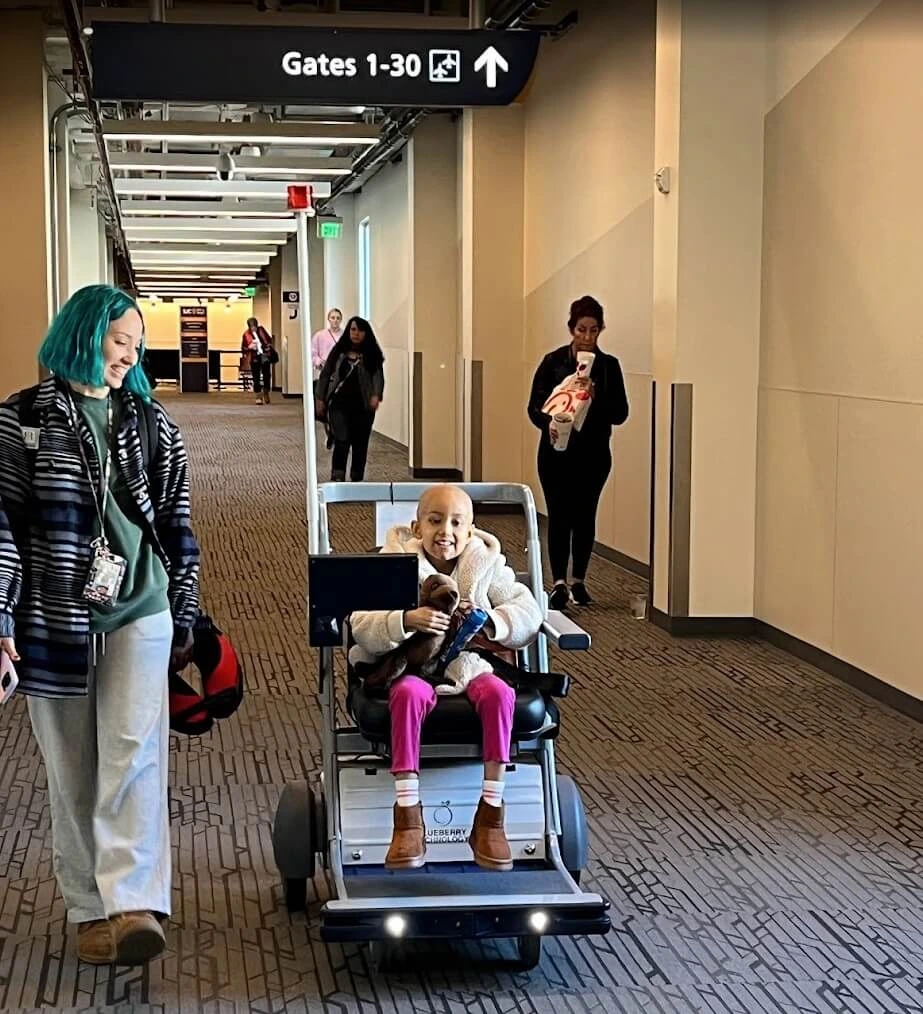
Safety requires the vehicle to respond to crowds, luggage and unpredictable movement. BBGo continuously senses its surroundings and can slow down or stop as conditions change. Its speed is deliberately limited to support predictable movement around pedestrians. Riders can stop the vehicle and use the interface to request help. However, the response depends on how each location staffs and operates the service. Blueberry Technology says this part of the experience is still being refined.
Deployments in San José and Detroit have helped the company understand that effective autonomous mobility depends as much on service design as robotics. During one recent San José deployment, BBGo vehicles completed more than 1,700 movements, travelled 175 miles and operated autonomously for over 119 hours. Some passengers initially reached for the joystick, assuming they had to drive, then gained confidence after seeing the vehicle navigate independently.
Detroit’s operating environment raised questions about where vehicles should wait, how quickly staff can introduce BBGo, what should change during busy periods, and which terminal areas vehicles should avoid. Its speed must also allow companions to walk comfortably beside it. “The technology should adapt to people,” Ramanath says. “People should not have to adapt to the technology.”
Blueberry Technology sees potential beyond airports in hospitals, convention centres, museums, theme parks and large resorts. In each setting, distance can limit participation even when someone can otherwise enjoy the experience. BBGo’s aim is to help people preserve their energy for what they came to do.
The company continues learning from passengers and airport teams before expanding the service. Ramanath believes people experiencing mobility barriers must help define problems and shape solutions. BBGo will not meet every mobility need, nor is autonomous travel every passenger’s preference.
“We do not think accessibility means replacing assistance with independence,” Ramanath says. “It means giving people more ways to move through the world on their own terms.”