Listen to this Article

At the Indianapolis 500, speed is usually something people see. Cars cut around the track, positions change in an instant, and the race becomes a visual language of movement, timing and distance. For many blind fans, that kind of event has often been experienced through sound, description and the reactions of people nearby. Cadence changed that.
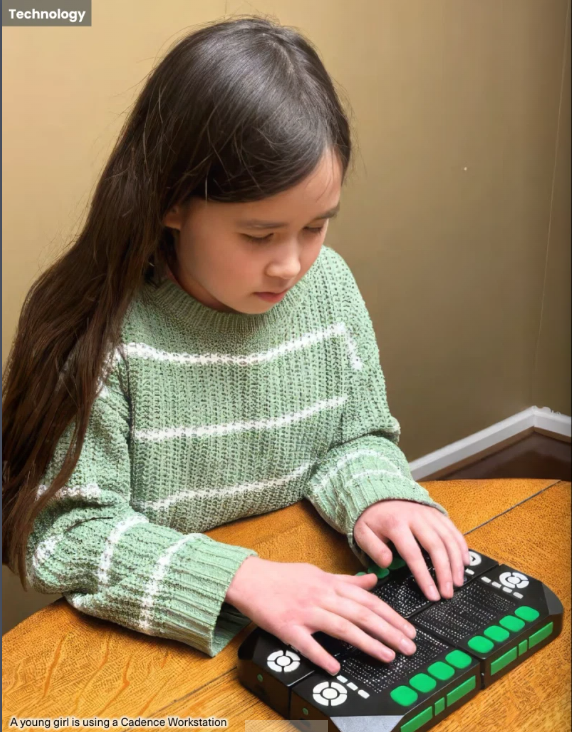
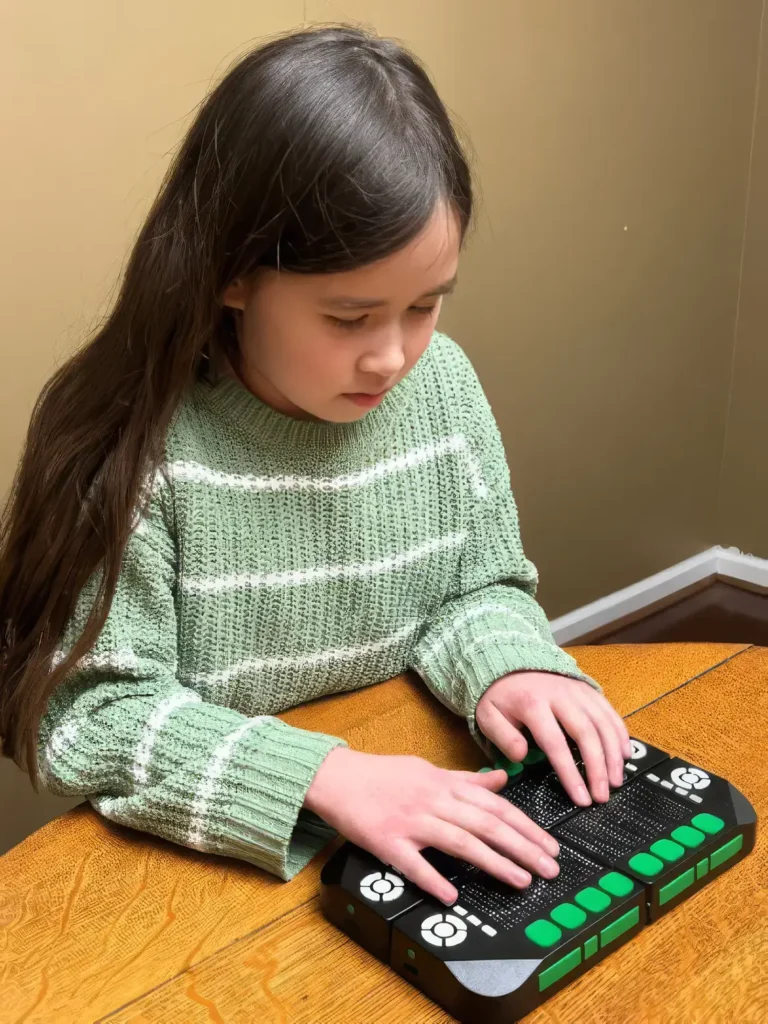
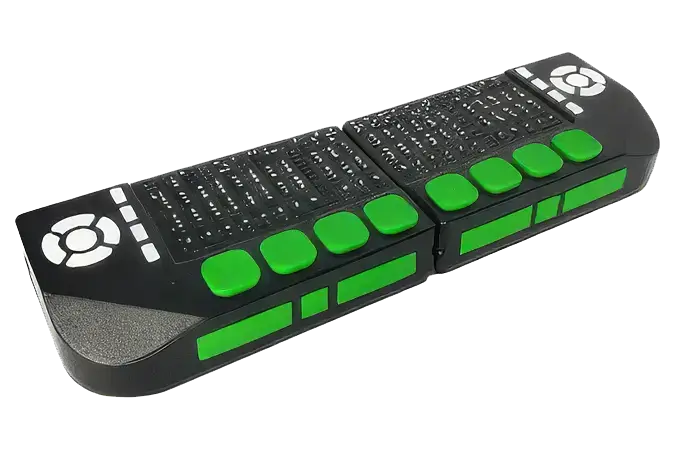
Created by Indiana-based Tactile Engineering, Cadence is an advanced tactile tablet that allows blind and visually impaired users to interact with braille, raised print, graphics, animation and real-time information through touch. At the Indianapolis 500, 16 blind individuals used Cadence tablets which were connected to live race telemetry. As the cars moved around the track, the tablets translated that movement into tactile information. Participants could feel the racetrack, the positions of the cars and the pace of the race as it unfolded. That mattered because being present does not automatically translate into being included. Real access means being able to participate in real time, with the same immediacy, curiosity and independence as everyone else.
For Dave Schleppenbach, CEO of Tactile Engineering, the idea behind Cadence reaches back decades. While doing graduate studies at Purdue University, he taught visually impaired students subjects such as chemistry, physics, calculus and biology. The challenge he encountered was not the students’ ability but the lack of tools to give them equal access to information that is usually shown visually: formulas, graphs, diagrams, maps, tables and spatial relationships. Nevertheless, some of those students went on to earn advanced degrees in chemistry and other fields. For Schleppenbach, that success revealed both possibility and loss. There was talent waiting at the door, but too often the door was blocked by inaccessible formats.
Cadence is an answer to that problem, and its earliest spark came from an unlikely place. Years ago, while working in a lab at Purdue, Schleppenbach visited a gift shop and saw a small pin matrix toy that could create a raised impression of a hand. He purchased it, brought it back to the lab and began thinking about what might happen if that kind of tactile surface could be controlled by a computer. What if images, diagrams and other visual information could be translated into something people with visual impairments could feel?
That simple question became the beginning of a much larger pursuit. Schleppenbach describes the path from that first idea to Cadence as nearly 30 years of patents, failed attempts, trial and error and designs that could not yet be manufactured. The product Tactile Engineering is producing today grew out of the company’s most recent concept, developed in 2014, and years of work to turn that concept into a real device.
Cadence was not born from technology looking for a purpose. It was born from a specific access barrier and the belief that visual information should not remain out of reach simply because someone cannot see it.
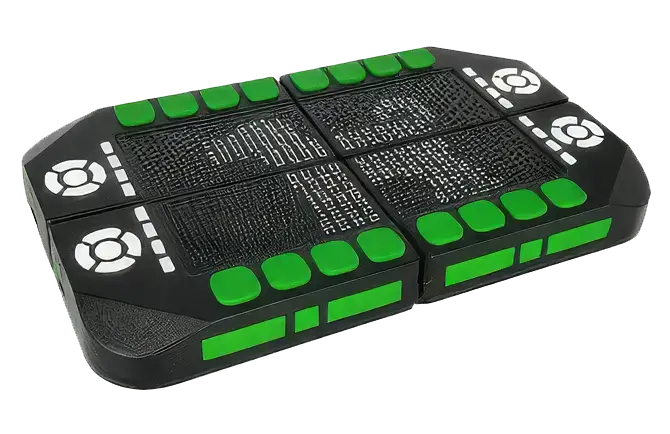
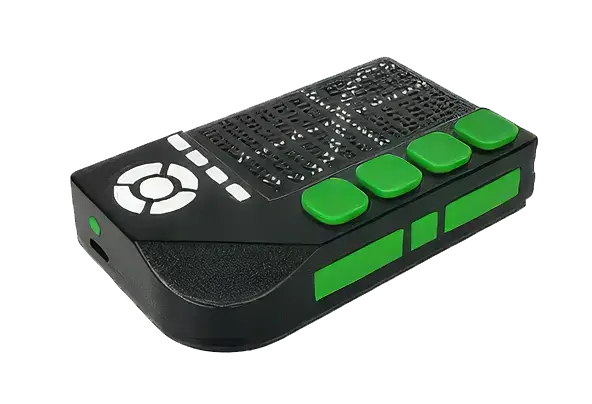
The device uses 384 rapidly refreshing tactile dots to create a rectangular screen that can be read by the fingers. Unlike a traditional one-line braille display, Cadence can show multiple lines of braille, tactile graphics, raised print, moving images and dynamic information. The tablets are modular, meaning one device can fit in a pocket, while multiple units can be connected to create a larger surface for school, work, STEM learning or live experiences.
Its applications are broad, reaching into education, early intervention, employment, recreation and accessible experiences. Cadence can support braille literacy, tactile learning, STEM education, workplace tools, screen-reader access and shared digital materials. But its power becomes clearest when those uses are imagined in real life.
Its real significance is the freedom it gives users to choose how they engage, learn and participate. At a sporting event, a sighted fan may look at the track, glance at a phone, check statistics, watch a screen, listen to the announcer or step away for a snack. No one expects them to rely on one stream of information. Cadence brings that same principle to blind fans. Some may listen to audio description. Some may follow the tactile race in real time. Some may check statistics in braille. Some may move between all of those options at their own pace.
That is a different kind of inclusion. It gives people access to the information instead of asking them to wait for someone else to interpret every moment.
The Indy 500 demonstration made that power visible, even though the experience was tactile, participants could follow cars moving at more than 200 miles an hour. They could feel the shape of the track and sense the closing distance between competitors. In a race known for noise, speed and spectacle, Cadence made another form of attention possible.
Schleppenbach has seen this kind of reaction before. He described meeting a 24-year-old woman in Daytona who had lost her vision after cancer. She had been trying to learn braille for six months using paper, without success. After sitting down with Cadence, she learned the braille alphabet in about 20 minutes. The point is not that technology magically solves everything but that the right access tool can meet the learner in a way the old method may not.
That is where Cadence becomes so powerful. It does not treat touch as a lesser substitute for sight but as an intelligent, immediate and expressive way to receive information. Imagine:
- a blind student exploring a chemistry diagram as it changes
- a worker reading a spreadsheet in a way that shows structure instead of forcing them to listen cell by cell
- a traveller feeling a map update in real time while keeping their ears free for traffic and the surrounding environment
- a child learning braille by feeling letters change beneath their fingertips
- a fan at a baseball game, tennis match or fireworks show experiencing movement, pattern and timing directly
It gives people greater control over how they learn, work and experience the world, opening pathways to independence, participation and possibility.
Technology is often celebrated for being fast, sleek or impressive. Cadence deserves attention for another reason. It shows what happens when innovation is designed around access from the beginning. People who are blind or have low vision are not excluded from school, work, culture, travel or sport because they lack interest or ability. Too often, they are excluded because the world has not made the effort to translate experiences in ways that allow them to participate fully.
At the Indianapolis 500, Cadence translated the experience. The roar of the crowd was there, the announcers and the speed. And for blind participants seated with their hands on the tablets, the race was also under their fingertips.
That is the kind of technology that reaches beyond the device itself, giving people new ways to access information, take part in the world and imagine a life that once felt out of reach.
Perhaps that is the most profound part of Cadence. It does not simply make information accessible. It actually makes participation tangible, turning access into texture, rhythm and motion, allowing people to feel a moment unfold beneath their fingertips and enter the experience with the freedom to explore it for themselves.