
Listen to this Article

For companies developing assistive and accessibility technology, creating an innovative solution is only one part of the challenge. Reaching new markets, understanding unfamiliar systems and finding the right partners can be equally important. Those challenges were at the centre of a recent Australian market visit organized through the Mobility Unlimited Hub, a cohort-based program at MaRS Discovery District.
The Mobility Unlimited Hub began more than three years ago following extensive research to understand the gaps that persisted for active mobility innovators. According to Morgan Lorimer, Senior Manager of Cohort Programs at MaRS Discovery District, the research examined Canada’s active mobility landscape, including accessibility technology, assistive technology and rehabilitative technology, and aimed to identify the barriers to commercialization and growth. The answer was clear. “There was a huge need for that,” Lorimer says.
That research led to the creation of the Mobility Unlimited Hub, a worldwide movement for accessible mobility solutions launched by the Toyota Mobility Foundation. MaRS served as its first local anchor, launching the inaugural hub in Toronto, Canada. The first accelerator cohort included six companies. Following the success of that initial group, the program expanded to include another 10, bringing the total number of participating companies to 16. Building on the proven success of Toronto’s innovation ecosystem, the Foundation launched a second hub in São Paulo State, Brazil, in collaboration with Onovolab.
Applications are now open for Toronto’s third cohort, which will select 10 global pre-growth-stage startups working in active mobility and, for the first time, brain health innovations.
The hub provides resources tailored to companies operating in the mobility and assistive technology sector, including contracted services and public relations support. It has also been able to organize international delegations designed to help companies explore markets that could otherwise require considerable time and financial resources to access independently. Australia emerged as a particularly strong opportunity. But before choosing the destination, the Hub consulted participating companies about where they expected to generate revenue and which international markets made the most sense for their next stage of growth. Australia, Lorimer says, “far outweighed” the other markets being considered.
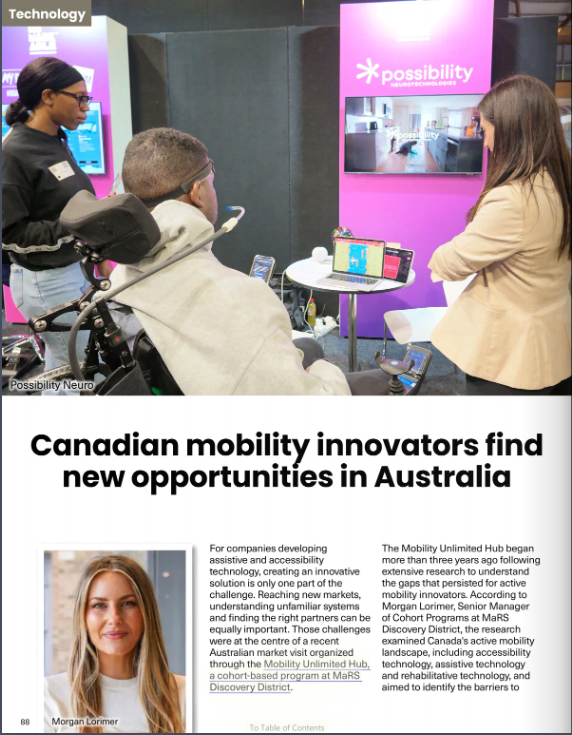
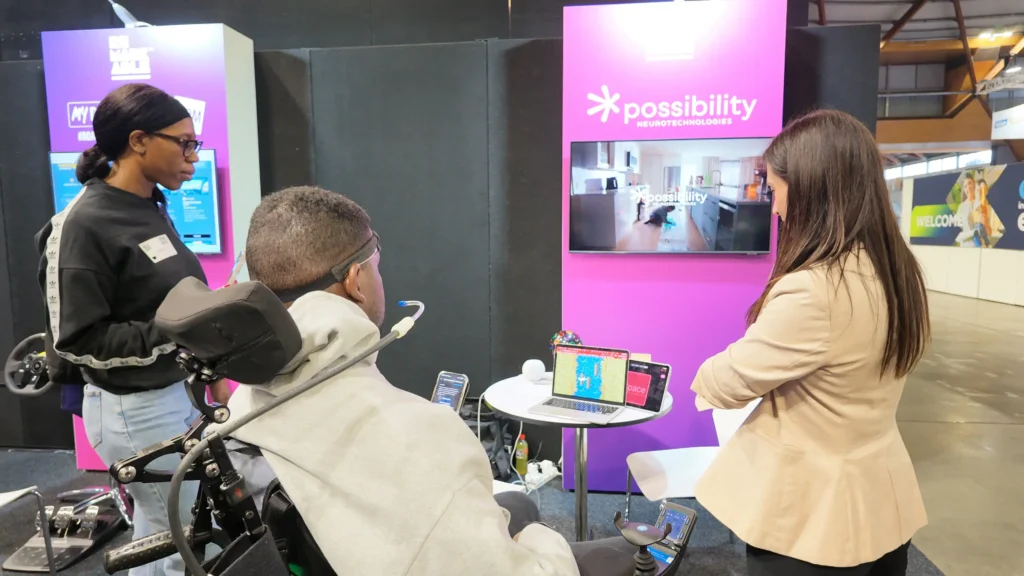
Connections with organizations including Remarkable and the Canadian Trade Commission in Australia helped the team identify opportunities around major events taking place during the same period, including ATSA Independent Living Expo and the Digital Health Festival. The resulting delegation brought founders and company representatives to Australia, while some companies were also represented by their local distributors. Much of the value came from what happened beyond the conference floor.
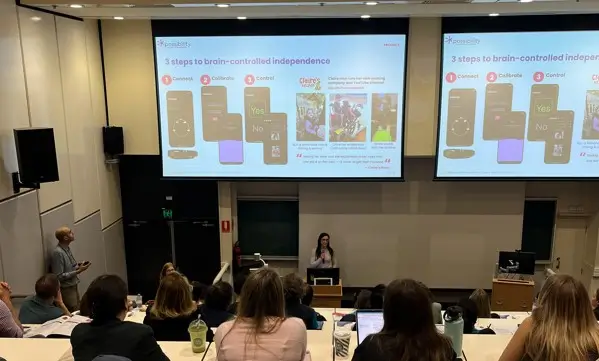
Throughout the visit, companies gained opportunities to better understand the Australian market, its end users and the systems that could help them bring their technologies into the country. Several participated in speaking opportunities, seminars and pitches at ATSA Sydney. Remarkable also hosted an accessibility-focused event in partnership with the delegation, giving the companies an opportunity to present their work to an audience already engaged with the sector.
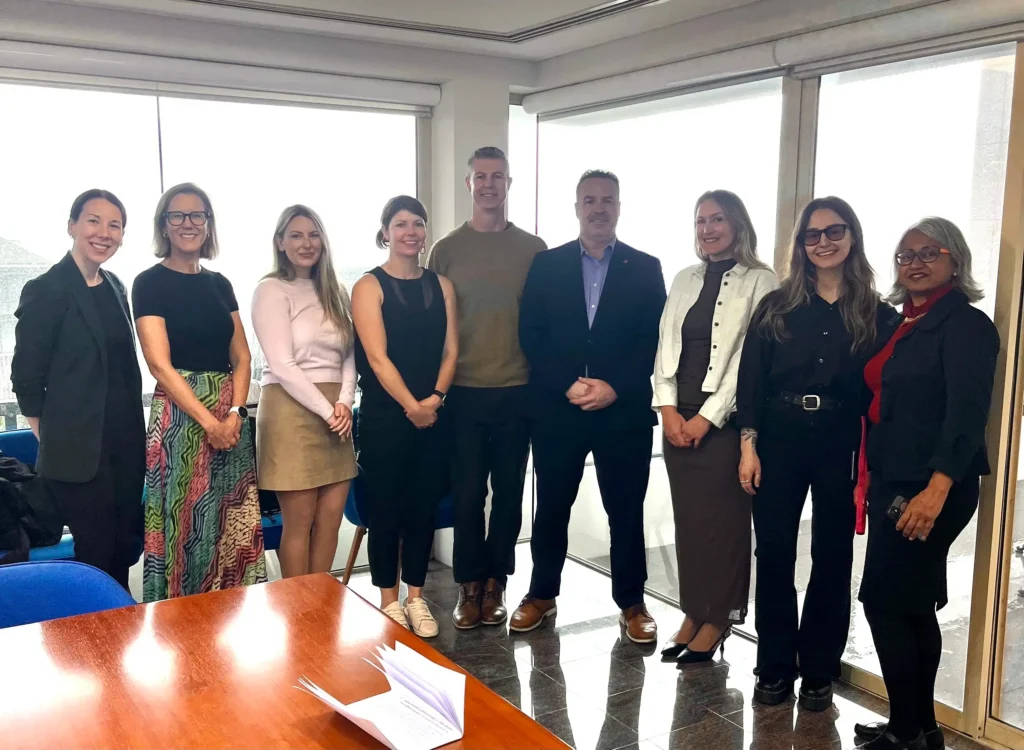
The delegation met with Ghislain Robichaud, who serves as Canada’s Consul General in Sydney, Australia and insurance representatives to learn more about Australia’s systems and how companies could navigate them. Another significant stop was Cicada Innovations in Sydney’s Westmead health precinct. The companies spent an immersive day learning about support available to international businesses and presenting their solutions directly to clinicians. The response was immediate. Lorimer says the presentations generated interest in follow-up conversations and in putting some of the companies’ devices into use. The clinicians also provided direct feedback to the participating companies.
The Australian visit also revealed differences in how disability supports and assistive technology are approached. Lorimer says one of the things that stood out was a greater emphasis on enabling people to live fuller lives. “In Canada our system tends to be medicalized,” she says. In Australia, she observed an ethos centred more on “how can we enable people” and help them live to their potential. The delegation also learned more about Australia’s National Disability Insurance Scheme, or NDIS, and how funding for accessibility aids operates within the country.
At ATSA Sydney, Lorimer was struck by the scale and variety of accessibility-focused solutions on display. “I’ve never been to a conference like it before,” she says. The event also produced tangible connections. According to Lorimer, each participating company made approximately 30 to 40 contacts, with some of those conversations already resulting in business opportunities. Some companies also continued to other Australian locations, including Brisbane, to make additional connections.
For Lorimer, international market visits can be particularly valuable because of the difficulty mobility and assistive technology companies face when trying to scale. “It’s really an uphill battle that these companies are facing to scale their solutions,” she says.
Building relationships in different regions can help companies move forward while allowing more people to discover what they are creating. A structured delegation also reduces some of the time and expense involved in arranging meetings and making those connections independently.
The companies returned to Canada with a clearer understanding of the opportunities Australia could offer. Lorimer says those included potential research and development partnerships as well as opportunities to bring their technologies to the Australian market. One example is Possibility Neurotechnologies’ co-founder and CEO Dion Kelly, who had previously travelled to Australia and, through this visit, was able to identify potential research and development partners and meet clinicians.
The reception Canadian companies received also made an impression. “The stakeholders that they have set up there want Canadian companies to succeed,” Lorimer says. The experience reinforced another lesson: entering a new market requires more than a single visit. “You have to keep showing up and you have to keep building these relationships,” she says.
For the participating companies, the delegation provided an opportunity to determine which relationships and areas deserved continued attention. It also strengthened connections within the cohort itself. Lorimer noted that founders frequently advocate for one another, talking about each other’s technologies even when the other company is not in the room. What left Lorimer particularly optimistic was the number and diversity of people developing new accessibility solutions and the purpose behind their work. She saw innovators developing solutions for people across a range of ages and demographics, with people actively incorporated into the design process.
For people who have ideas of their own, Lorimer’s message is encouraging. “Go for it,” she says. “There is an audience for what they might build, and there are support systems out there to help them.”
The Sydney delegation showed what can happen when those support systems extend beyond national borders, giving Canadian mobility innovators the opportunity to meet clinicians, explore partnerships, understand another market and begin building relationships that could help their technologies reach more people.